
Health

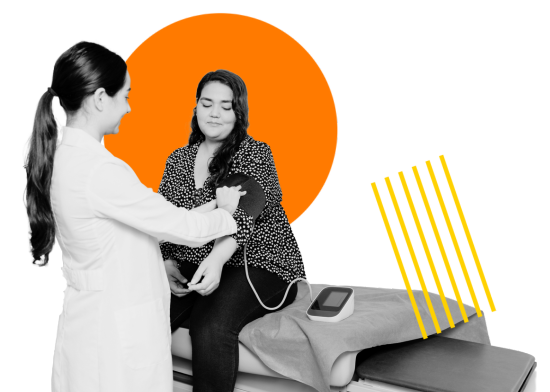
Does Your Doctor Screen for Intimate Partner Violence?

The American College of Obstetricians and Gynecologists (The College) announced this week their committee opinion that all ob-gyn doctors should routinely screen women for intimate partner violence (IPV). This marks the first time that a major medical association has formally recognized reproductive coercion as an important issue related to abusive and controlling relationships. Specifically, reproductive coercion refers to behaviors that a partner engages in to promote unintended pregnancy against a woman’s will by sabotaging her use of contraception and/or by using threats or abuse if she does not comply with his desires about the pregnancy outcome. [...]

Congratulations to Emily Rothman, Winner of the 2012 Linda Saltzman New Investigator Award

Congratulations to Emily Rothman, Winner of the 2012 Linda Saltzman New Investigator Award

Futures Without Violence and the CDC Foundation are proud to honor Emily Rothman as our 2012 Award winner for her outstanding work in the study of dating abuse and intimate partner violence. The Award is also a testimony to the late Dr . Linda Saltzman, who connected research, policy, science and advocacy in ways that broke new ground at the CDC. [...]

National Conference on Health & Domestic Violence

National Conference on Health & Domestic Violence

The 6th Biennial National Conference on Health and Domestic Violence provides valuable professional education on the latest research and innovative health prevention and clinical responses to domestic violence. Join us in San Francisco! Register today! [...]

Home Visitation Programs Can Help More Families if They Address Domestic Violence

Home Visitation Programs Can Help More Families if They Address Domestic Violence

The Affordable Care Act, passed in 2010, included new benchmark requirements for maternal infant and early childhood home visitation programs. One such benchmark requires home visitation programs to measure a reduction in "crime or domestic violence". [...]

Health Resource Center on Domestic Violence

Health Resource Center on Domestic Violence

The National Health Resource Center on Domestic Violence is the nation’s clearinghouse for information on the health care response to domestic violence and provides free technical assistance and materials to thousands of people each year. The Center is one of five specialized domestic violence resource centers in the country funded by the U.S. Department of Health and Human Services. [...]

Reproductive Health Initiative

Reproductive Health Initiative

Pregnancy is an important experience in a woman’s life and violence should not be a part of it. With nearly one in three women at risk for abuse in her lifetime, domestic violence is more common than pre-eclamplsia and hypertension -- both commonly addressed during pregnancy. Yet women are rarely asked about abuse or given information about the links between violence and their health. [...]

Project Connect

Project Connect

Futures Without Violence, formerly Family Violence Prevention Fund has chosen ten sites in nine states for a groundbreaking two-year violence prevention initiative designed to improve the health and safety of women and children. Project Connect: A Coordinated Public Health Initiative to Prevent Violence against Women is funded by the Office on Women’s Health of the U.S. Department of Health and Human Services. It will find new ways to identify, respond to and prevent domestic and sexual violence, and promote an improved public health response to abuse. Project Connect funding stems from the health provisions in the Violence against Women Reauthorization Act of 2005. [...]

Native Health Initiative

Native Health Initiative

Intimate partner violence poses a significant health threat across Indian Country. Increasingly, health care professionals recognize that it is a major public health problem that causes grave and lasting harm to individuals, families and communities. In the largest-ever survey of its kind, a 2008 Centers for Disease Control and Prevention report on health and violence found that 39 percent of Native women reported that they were victims of intimate partner violence some time in their lives – a rate higher than any other race or ethnicity surveyed. [...]